Flashcards on RianThai: how they work and how to use them
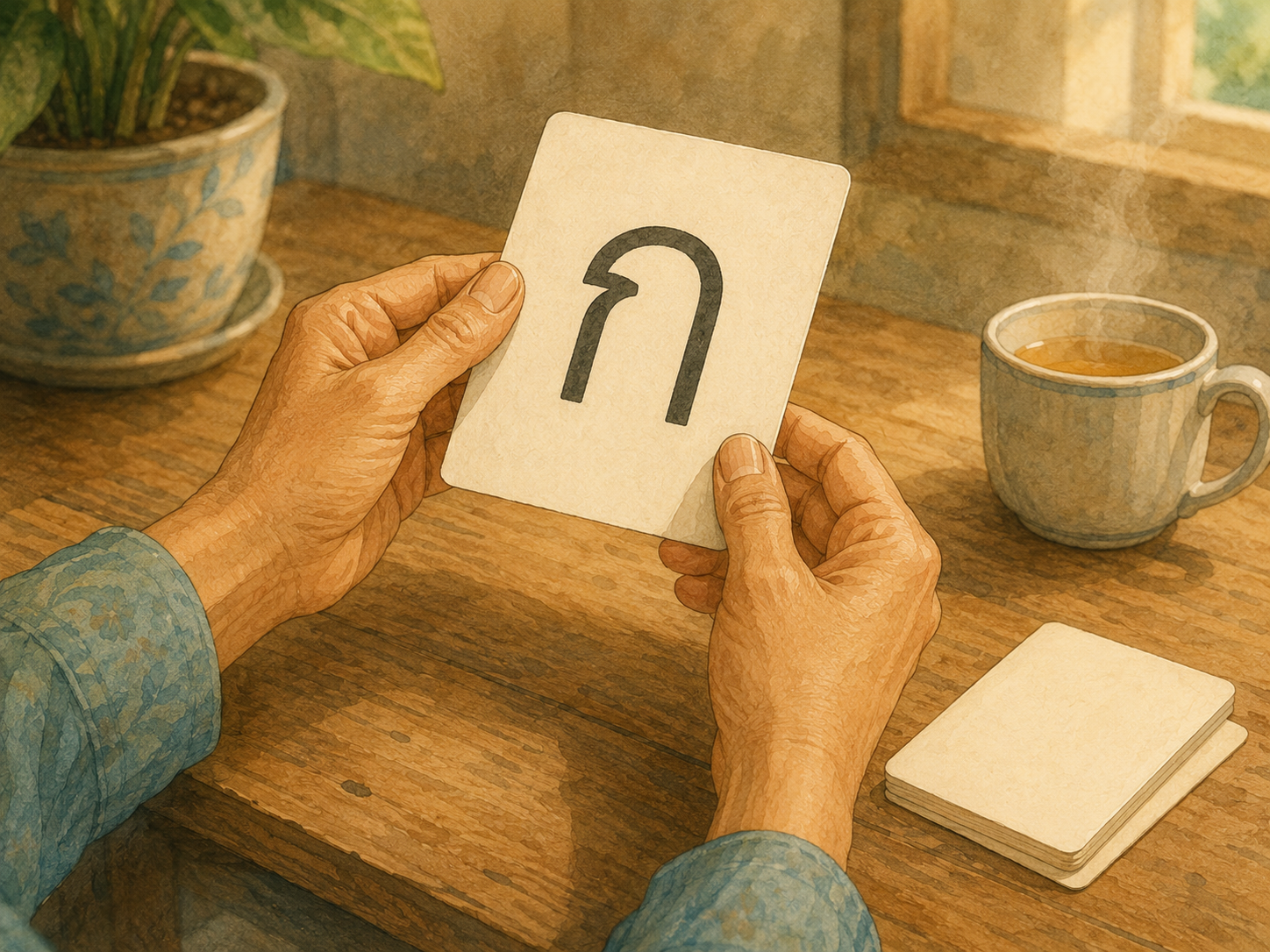
The flashcards on RianThai cover the 44 letters of the Thai alphabet — every consonant you'll see in real Thai writing, with its name, sound, and class. This page explains how the deck actually drills them: what spaced repetition is doing behind the scenes, and what each of the four review buttons means.
Open the Thai alphabet deck — or read on if it's your first time using flashcards.
Flashcards on RianThai are short, two-sided cards for learning Thai letters, sounds and words. You see one side (say, the letter ก), try to remember the other side (the name, the sound, the class), then flip the card and tell the app how it went. The idea is simple. Instead of cramming, you do a small batch every day, and the system quietly arranges for each card to come back to you right around the moment your brain was about to lose it.
That's really all there is to it. The rest of this page just explains what's happening behind the scenes, and what the four review buttons do.
Why flashcards actually work
Memory fades, unless you poke it
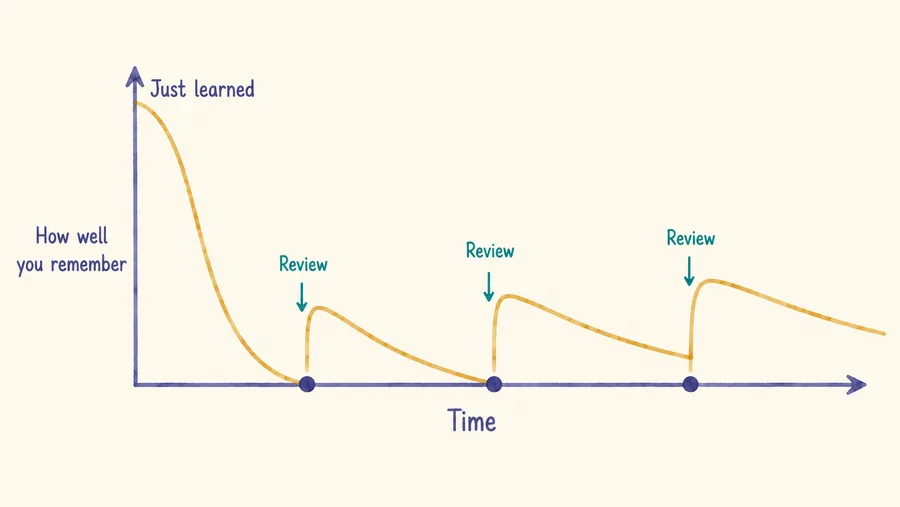
If you learn that ก is "gor gai" today and never look at it again, by next week it will be a vague shape. By next month it's gone. Memory isn't a hard drive. Things you don't touch get quietly thrown out.
Each time you successfully remember something, you reset the timer, and the next fade is slower. The first refresh might last a few days. The second might last a week. The third, several weeks. The fourth, a couple of months. So a card you've recalled half a dozen times across a few months is genuinely sticky, not because you saw it a lot, but because you reached for it from inside your own head, several times, when it was hard.
Pulling the answer out is stronger than reading it in
This is the part that surprises most people. Reading your notes ten times feels productive but does very little. What actually changes your memory is the small moment of effort when you stare at a card and think, "okay, ก or ค? which one was which?" That little tug, even if you get it wrong, is what makes next time easier.
So when you sit with a flashcard, resist the urge to flip it straight away. Give yourself two or three seconds to actually try. If nothing comes, that's fine, flip it. But don't skip the trying.
Spacing beats cramming
Twenty repetitions in one evening do less than five repetitions spread across three weeks. Same number of cards, but the spaced version sticks, and the crammed version is mostly gone by Friday. The schedule on RianThai just puts your reviews on those useful days instead of all on the same day.
How the deck schedules your cards
Every card has its own little timeline. When you learn a new card, it's shown a few times during the same session, then again the next day. If you keep getting it right, the gap grows: a few days, then a week, then a few weeks, then a month or two. If you forget a card, it pops back into the near future and the gap starts over from a smaller value.
So your daily pile is a mix of cards at different stages: fresh ones from last week, comfortable ones from a month ago, plus any new cards you added today. You don't need to track any of this. Open the deck, and whatever's due that day is what you'll see.
The four buttons: Again, Hard, Good, Easy
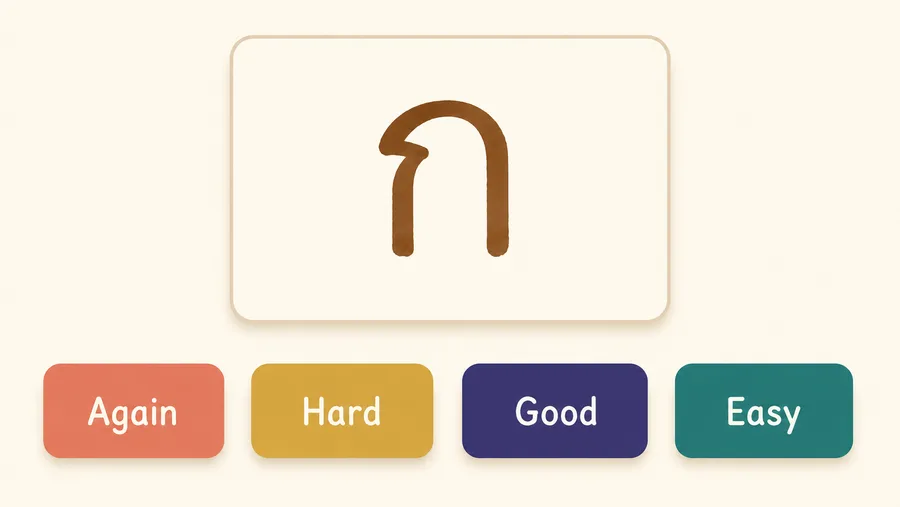
When you flip a card, you get four choices. They aren't grades. They're how you tell the system what your memory just did, so it can pick a good next date.
| Button | When to use it | What it does |
|---|---|---|
| Again | You didn't remember it, or got it wrong. | The card resets. It comes back in a few minutes during this session, then again soon over the next day or two. Use it honestly even when you "almost" had it. |
| Hard | You got it, but with real effort: long pause, second-guessing, "let me think…" | The next gap will be shorter than usual. The card stays in active rotation. |
| Good | You remembered it without much trouble. A small pause is fine. | The default answer. Most of your presses should be Good. The gap grows normally. |
| Easy | You knew it instantly and it felt almost trivial. | The next gap jumps further into the future. Use sparingly. Push a card too far and you'll have forgotten it by the time it returns. |
Being honest with the buttons is what makes the schedule work. There's no penalty for Again, and no reward for Easy. If you press Good on a card you actually struggled with, you're not "winning." You're telling the system to wait longer than it should, and then in three weeks you'll see that same card and have no idea what it is. Press what really happened.
How to use the flashcards well
A few small habits make more difference than any clever trick.
Do a little every day. Ten to twenty minutes daily will outperform a two-hour Sunday session, and the schedule assumes you'll be back tomorrow. If you skip a few days, the due pile gets ugly and the temptation is to skip more; when that happens, do only the reviews and pause new cards for a few days until you're caught up.
Start with one deck. The Thai alphabet deck is a good first one. Adding three decks at once means three growing piles, and one of them will get neglected, usually the one you needed most.
Say the answer out loud when you can. Reading and pronunciation reinforce each other, and Thai tones in particular need your mouth, not just your eyes.
Trust the gaps. If a card feels too easy after a long break, that's the spacing working, not a waste. Press Good and move on. And it's fine to forget. You're going to blank on cards. Press Again, see the answer, and let it come back. Forgetting and re-learning is part of what makes the memory eventually stick.
Last thing: flashcards aren't the whole job. Read a Thai sign on Google Maps. Watch a song with subtitles. Try to spell out the name of a dish on a menu. The cards make the pieces familiar; the rest of your life with Thai is what makes them mean something.
What to expect over time
The first week is the hardest, because every card is brand new and the daily session feels long. Around the second or third week things settle down. Most cards become familiar, the daily time stabilises, and you start spotting Thai letters or words in places you weren't actively looking: a menu, a song subtitle, a sign at the airport. That's the moment most people first feel like the time is paying off.
Keep it small, keep it daily, and be honest with the four buttons. The rest takes care of itself.