Telling Time in Thai: The Complete Guide to the Thai Clock System
If you have ever asked a Thai person what time it is and gotten an answer that made no sense — welcome to one of the most genuinely confusing parts of learning Thai. Telling time in Thai is not hard once you understand the logic, but that logic is nothing like English. Thai speakers divide the day into named segments of roughly four to six hours each, and they count hours relative to that segment rather than counting straight from 1 to 12. This guide breaks the whole system down clearly, gives you every hour in a full reference table, and leaves you ready to ask and answer "what time is it?" in Thai with confidence.
Why Thai Time Confuses Learners
In English, you say "3 o'clock" and add AM or PM. In Thai, you say the equivalent of "3 of the morning segment" or "3 of the evening segment." The hour number alone means nothing without knowing which segment of the day you are in. On top of that, Thai has a formal 24-hour system used in transport schedules and official broadcasts, and a colloquial spoken system used in everyday conversation. Both are important to understand.
The good news: once you see the day mapped into its segments, the spoken system becomes logical and even elegant.
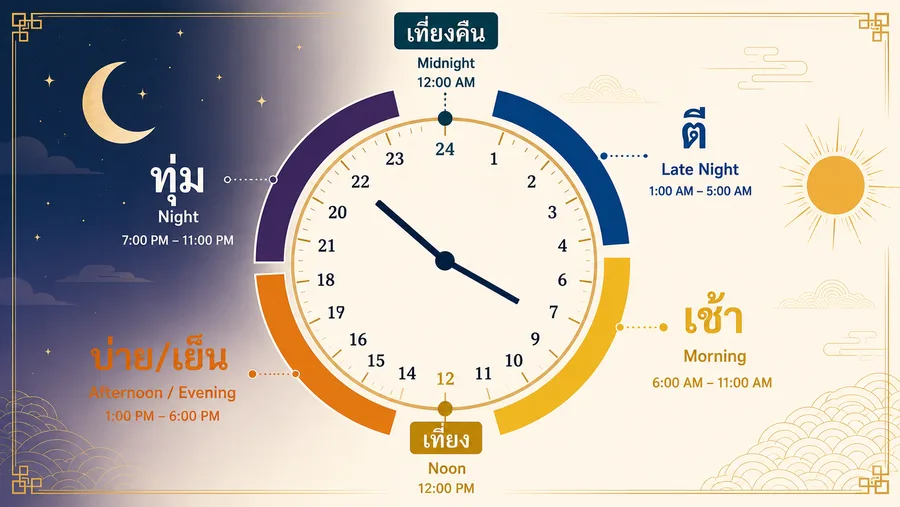
The Key Vocabulary for Time in Thai
Before the system itself, learn these building-block words. Tap each one to hear it.
| Word | Used for |
|---|---|
| นาฬิกาnaa-lí-gaa | Formal/24-hour clock; also the word for "clock/watch" |
| โมงmoong | Colloquial "o'clock" — morning and afternoon hours |
| ทุ่มtûm | Evening/night hours (roughly 7 pm–11 pm) |
| ตีdtii | Late-night/pre-dawn hours (roughly 1 am–5 am) |
| เที่ยงtîiang | Noon / 12 pm |
| เที่ยงคืนtîiang-kʉʉn | Midnight / 12 am |
| นาทีnaa-tii | Minutes |
| ครึ่งkrʉ̂ng | Half (used for "half past") |
The Thai 6-Hour Clock System Explained
This is the centerpiece of Thai time-telling. Instead of splitting the day into two 12-hour halves (AM and PM), Thai speakers split it into named segments. Each segment runs for roughly four to six hours, and the hour number you say is always counted from 1 upward within that segment — never past 6.
The Segments at a Glance
| Segment | Thai | Transliteration | Approximate hours | Counts from |
|---|---|---|---|---|
| Late night / pre-dawn | ตี | dtii | 1 am – 5 am | ตีหนึ่ง (1 am) → ตีห้า (5 am) |
| Morning | เช้า | cháao | 6 am – 11 am | หกโมงเช้า (6 am) → สิบเอ็ดโมงเช้า (11 am) |
| Noon | เที่ยง | tîiang | 12 pm | เที่ยง (standalone) |
| Afternoon | บ่าย | bàai | 1 pm – 3 pm | บ่ายโมง (1 pm) → บ่ายสามโมง (3 pm) |
| Late afternoon / evening | เย็น | yen | 4 pm – 6 pm | สี่โมงเย็น (4 pm) → หกโมงเย็น (6 pm) |
| Night | ทุ่ม | tûm | 7 pm – 11 pm | หนึ่งทุ่ม (7 pm) → ห้าทุ่ม (11 pm) |
| Midnight | เที่ยงคืน | tîiang-kʉʉn | 12 am | เที่ยงคืน (standalone) |
Important note on เช้า and เย็น: In casual speech, Thais often drop the segment word for mid-range morning and evening hours when context makes it obvious. You will hear both สี่โมงเย็น and simply สี่โมง for 4 pm. For ตี and ทุ่ม, the segment word is essential and never dropped.
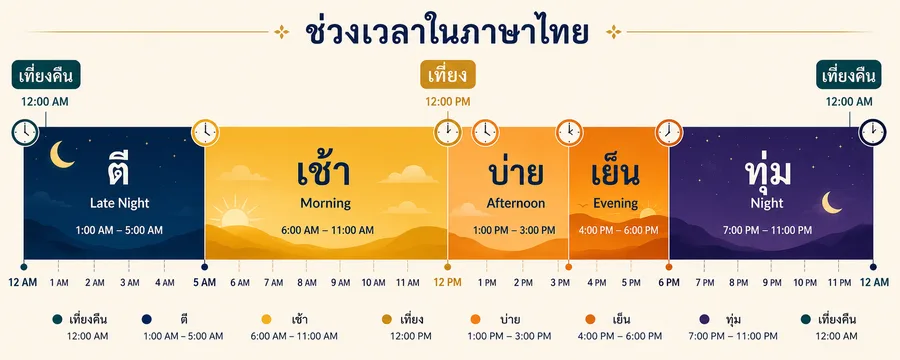
The Thai day mapped into its named clock segments, from midnight to midnight.
Full Hour-by-Hour Reference Table
This is the table you bookmark. Every hour of the day in Thai, with script, transliteration, and a breakdown of how the phrase is built. Use it to answer any "what is X pm in Thai?" question.
| English time | Thai script | Transliteration | Literal breakdown |
|---|---|---|---|
| 12 am (midnight) | เที่ยงคืน | tîiang-kʉʉn | mid + night |
| 1 am | ตีหนึ่ง | dtii-nʉ̀ng | dtii 1 |
| 2 am | ตีสอง | dtii-sɔ̌ɔng | dtii 2 |
| 3 am | ตีสาม | dtii-sǎam | dtii 3 |
| 4 am | ตีสี่ | dtii sìi | dtii 4 |
| 5 am | ตีห้า | dtii-hâa | dtii 5 |
| 6 am | หกโมงเช้า | hòk moong cháao | 6 o'clock morning |
| 7 am | เจ็ดโมงเช้า | jèt moong cháao | 7 o'clock morning |
| 8 am | แปดโมงเช้า | bpɛ̀ɛt moong cháao | 8 o'clock morning |
| 9 am | เก้าโมงเช้า | gâao moong cháao | 9 o'clock morning |
| 10 am | สิบโมงเช้า | sìp moong cháao | 10 o'clock morning |
| 11 am | สิบเอ็ดโมงเช้า | sìp-èt moong cháao | 11 o'clock morning |
| 12 pm (noon) | เที่ยง | tîiang | noon (standalone) |
| 1 pm | บ่ายโมง | bàai-moong | afternoon o'clock |
| 2 pm | บ่ายสองโมง | bàai sɔ̌ɔng moong | afternoon 2 o'clock |
| 3 pm | บ่ายสามโมง | bàai sǎam moong | afternoon 3 o'clock |
| 4 pm | สี่โมงเย็น | sìi moong yen | 4 o'clock evening |
| 5 pm | ห้าโมงเย็น | hâa moong yen | 5 o'clock evening |
| 6 pm | หกโมงเย็น | hòk moong yen | 6 o'clock evening |
| 7 pm | หนึ่งทุ่ม | nʉ̀ng tûm | 1 thûm (night 1) |
| 8 pm | สองทุ่ม | sɔ̌ɔng tûm | 2 thûm (night 2) |
| 9 pm | สามทุ่ม | sǎam tûm | 3 thûm (night 3) |
| 10 pm | สี่ทุ่ม | sìi tûm | 4 thûm (night 4) |
| 11 pm | ห้าทุ่ม | hâa tûm | 5 thûm (night 5) |
Quick memory anchors: - 7 pm resets the count to 1 — it is หนึ่งทุ่ม (nʉ̀ng tûm), literally "night one." - 1 am also resets — it is ตีหนึ่ง (dtii-nʉ̀ng), literally "strike one." - Noon and midnight are standalone words, not counted o'clocks. - 1 pm is the oddball: it is บ่ายโมง (bàai-moong), not บ่ายหนึ่งโมง — the "one" is dropped.
Telling Minutes in Thai
Once you know the hour, adding minutes is straightforward.
The structure
[hour] + [number] + นาที (naa-tii)
- 3:15 pm → บ่ายสามโมงสิบห้านาที (bàai sǎam moong sìp-hâanaa-tii) — "afternoon 3, fifteen minutes"
- 9:30 am → เก้าโมงเช้าสามสิบนาที (gâao moong cháao sǎam-sìpnaa-tii) — "9 o'clock morning, thirty minutes"
Half past — ครึ่ง (krʉ̂ng)
"Half" is a common shortcut for :30. Just add ครึ่ง directly after the hour:
- 8:30 am → แปดโมงครึ่ง (bpɛ̀ɛt moong krʉ̂ng) — "8 o'clock half"
- 2:30 pm → บ่ายสองโมงครึ่ง (bàai sɔ̌ɔng moong krʉ̂ng) — "afternoon 2 half"
- 9:30 pm → สามทุ่มครึ่ง (sǎam tûm krʉ̂ng) — "night 3 half"
"Minutes to" — อีก ... นาที
Thai also has a way to say "X minutes until the next hour":
อีก (ìik) + [minutes] + นาที + จะ (jà) + [next hour]
- 3:45 pm can be said as อีกสิบห้านาทีจะบ่ายสี่โมง — "fifteen more minutes and it will be 4 pm."
In casual speech, Thais most often just say the hour and full minutes, so do not stress the "minutes to" form until you are comfortable with the basics.
Asking "What Time Is It?" in Thai
The most useful question you will ever need:
กี่โมงแล้ว (gìi moong lɛ́ɛo) — "What time is it?" (literally: "how many o'clocks already?")
You may also hear:
ตอนนี้กี่โมง (dtɔɔn-níi gìi moong) — "What time is it now?"
How to answer
Simply say the time using the patterns from the table above. In natural spoken Thai, you can be brief:
- "It is 3 pm." → บ่ายสามโมง (bàai sǎam moong)
- "It is about 8 pm." → ประมาณสองทุ่ม (bprà-maan sɔ̌ɔng tûm) — "approximately night 2"
- "It is half past 6 am." → หกโมงครึ่ง (hòk moong krʉ̂ng)
The word ประมาณ (bprà-maan) means "approximately" or "about" and is extremely common when giving or asking for an approximate time. Drop it in front of any time to soften the answer.
The Formal 24-Hour System (นาฬิกา)
When you hear announcements at airports, train stations, or on Thai television, you will hear a different system. This is the formal 24-hour clock, and it uses นาฬิกา (naa-lí-gaa) instead of โมง/ทุ่ม/ตี.
How it works
[24-hour number] + นาฬิกา + [minutes] + นาที
| Time | Formal Thai | Transliteration |
|---|---|---|
| 6:00 am | หกนาฬิกา | hòk naa-lí-gaa |
| 13:00 (1 pm) | สิบสามนาฬิกา | sìp sǎam naa-lí-gaa |
| 15:30 (3:30 pm) | สิบห้านาฬิกาสามสิบนาที | sìp-hâa naa-lí-gaa sǎam-sìpnaa-tii |
| 20:45 (8:45 pm) | ยี่สิบนาฬิกาสี่สิบห้านาที | yîi-sìp naa-lí-gaa sìi sìp-hâanaa-tii |
When you will hear it: - Flight and train departure announcements - TV program schedules - Government and military communications - Official event invitations
When you will NOT hear it: - Any casual everyday conversation - Asking a friend what time to meet - Street food vendors and markets
Recognize it when you hear it, but speak the colloquial system in daily life.
Essential Time Vocabulary
Tap any word to hear it.
| English | Thai |
|---|---|
| time / o'clock (formal) | นาฬิกาnaa-lí-gaa |
| o'clock (spoken) | โมงmoong |
| minute | นาทีnaa-tii |
| second | วินาทีwí-naa-tii |
| hour | ชั่วโมงchûua-moong |
| now | ตอนนี้dtɔɔn-níi |
| today | วันนี้wan-níi |
| morning | เช้าcháao |
| afternoon | บ่ายbàai |
| evening | เย็นyen |
| night | กลางคืนglaang-kʉʉn |
| noon | เที่ยงtîiang |
| midnight | เที่ยงคืนtîiang-kʉʉn |
| half (past) | ครึ่งkrʉ̂ng |
| approximately | ประมาณbprà-maan |
| late | สายsǎai |
| on time | ตรงเวลาdtrong-wee-laa |
| what time? | กี่โมงgìi moong |
Common Mistakes Foreigners Make
1. Using raw numbers without the segment word
Saying สาม (sǎam, three) for 3 pm makes no sense in spoken Thai — it could be 3 am (ตีสาม) or 3 pm (บ่ายสามโมง). Always attach the segment word.
2. Forgetting that 7 pm is "night one," not "night seven"
The ทุ่ม count resets at 7 pm. Seven pm is หนึ่งทุ่ม (nʉ̀ng tûm) — "thûm one." Nine pm is สามทุ่ม (sǎam tûm) — "thûm three" — but arrive there by counting forward from 7 pm, not backward from midnight.
3. Confusing noon and midnight
เที่ยง (tîiang) alone = noon. เที่ยงคืน (tîiang-kʉʉn) = midnight. The extra word คืน (kʉʉn, night) is what separates them.
4. Using นาฬิกา in conversation
Saying สิบสามนาฬิกา to a taxi driver or market vendor will get you a puzzled look. Save นาฬิกา for understanding announcements; speak บ่ายโมง in real life.
5. Getting 1 pm wrong
One pm is บ่ายโมง (bàai-moong) — not บ่ายหนึ่งโมง. This is the one afternoon hour where the "one" is omitted. Two pm is บ่ายสองโมง (with sɔ̌ɔng), but 1 pm drops the number entirely.
Quick Tips to Memorize the System
- Count from the anchor points: ตี starts at 1 am, ทุ่ม starts at 7 pm. Know those two anchors and you can count forward to any hour in those segments.
- เที่ยง and เที่ยงคืน are fixed islands — they stand alone and do not use โมง at all.
- Morning hours (6–11 am) count straight: six, seven, eight... just like English, with เช้า tagged on.
- เย็น (4–6 pm) is the short zone: only three hours. When the count reaches 6, the evening ends and night begins at หนึ่งทุ่ม at 7 pm.
Frequently Asked Questions
What is 6 pm in Thai?
Six pm is หกโมงเย็น (hòk moong yen), literally "6 o'clock evening." It is the last hour of the เย็น (evening) segment before the ทุ่ม (night) segment begins at 7 pm.
What is 9 pm in Thai?
Nine pm is สามทุ่ม (sǎam tûm), literally "night 3." The ทุ่ม segment starts at 7 pm (counted as 1), so 9 pm is the third ทุ่ม hour.
What is 11 am in Thai?
Eleven am is สิบเอ็ดโมงเช้า (sìp-èt moong cháao), literally "11 o'clock morning." It is the last hour of the เช้า (morning) segment before noon.
What is 12 pm (noon) in Thai?
Noon is simply เที่ยง (tîiang). It is a standalone word and does not use โมง. To emphasize "noon exactly," you can say เที่ยงวัน (tîiang-wan), with วัน meaning "day."
What is 2 pm in Thai?
Two pm is บ่ายสองโมง (bàai sɔ̌ɔng moong), literally "afternoon 2 o'clock." The afternoon (บ่าย) segment covers 1 pm to 3 pm in standard usage.
What is 9 am in Thai?
Nine am is เก้าโมงเช้า (gâao moong cháao), literally "9 o'clock morning." In clearly daytime context, Thais often shorten this to เก้าโมง (gâao moong).
Putting It All Together
Telling time in Thai is one of those topics where a small amount of structured learning pays off immediately and permanently. The key insight — that the day is divided into named segments and hours are counted within each — unlocks the entire system. Once that mental model clicks:
- You can decode any time you hear in conversation.
- You can read schedules and announcements in the formal นาฬิกา system.
- You can ask กี่โมงแล้ว and understand the answer.
- You will never confuse สามทุ่ม with ตีสาม again.
Practice by translating the clock on your phone every time you check it. Within a week, Thai time will feel natural.